Managing finances can feel like trying to solve a Rubik’s Cube blindfolded. Enter the 50/30/20 rule—a budgeting method that simplifies the chaos. This clever formula divides your income into three easy categories: 50% for needs, 30% for wants, and 20% for savings or debt repayment. It’s like having a personal finance coach in your pocket, minus the awkward small talk.
Understanding the 50/30/20 Rule
The 50/30/20 rule offers a straightforward budgeting framework. It breaks down income into three categories: 50% for essentials, 30% for wants, and 20% for savings or debt repayment. Essentials include housing, utilities, groceries, and transportation. Wants encompass non-essential items like dining out, entertainment, and hobbies. Savings cover future financial goals including retirement contributions and emergency funds.
Categorizing expenses using this method simplifies financial decisions. The approach encourages mindful spending and promotes a balanced lifestyle. By allocating half of income to essentials, individuals ensure they meet basic needs. Setting aside 30% for discretionary spending allows flexibility for enjoyable activities without guilt. Saving 20% on a monthly basis fosters financial security and prepares for unexpected expenses.
Using a spreadsheet effectively helps track these allocations. It makes monitoring spending patterns easy and identifies areas for improvement. Inputting monthly income into the spreadsheet provides a clear starting point. Next, determine the amounts for each category based on the 50/30/20 percentages. Regular updates to the spreadsheet keep the budget on track.
Adjusting the rule for individual circumstances is often necessary. Some may require more for essentials, while others may save more aggressively. Evaluating expenses periodically ensures alignment with evolving financial goals. Adherence to this framework facilitates better financial health and increases confidence in managing finances.
Creating a 50/30/20 Rule Spreadsheet
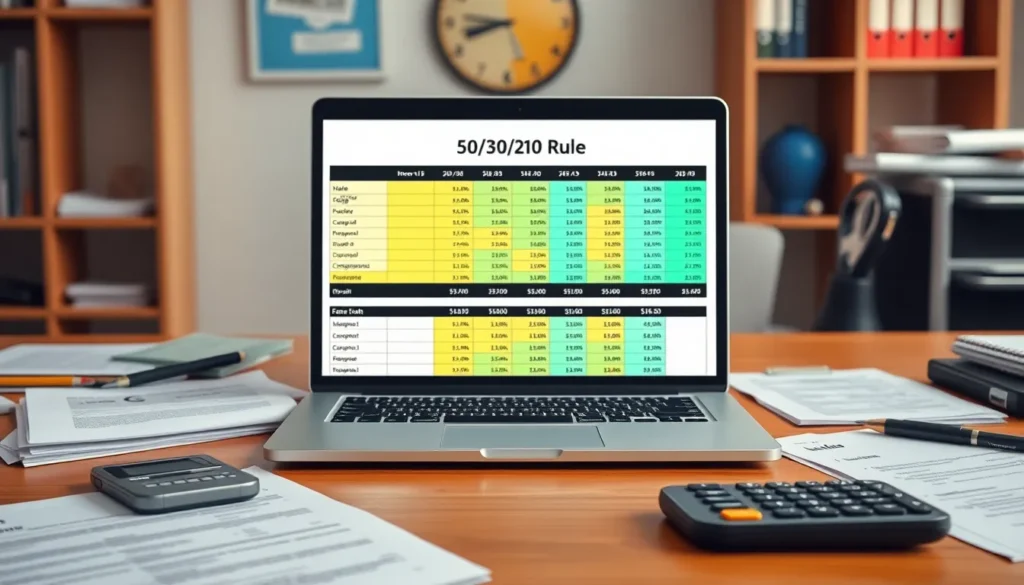
Creating a spreadsheet for the 50/30/20 rule streamlines financial tracking. It helps users visualize their budgets efficiently.
Selecting the Right Tools
Various tools can assist in building an effective spreadsheet. Microsoft Excel and Google Sheets rank among the most popular. Both programs offer templates designed specifically for budgeting, making setup simple. Users can also explore budgeting apps that sync with spreadsheets for real-time tracking. Online resources often provide free templates that align with the 50/30/20 framework. These templates enhance organization and provide a solid starting point for individual adjustments.
Designing Your Spreadsheet Layout
An effective layout improves usability and clarity. Start by creating three main categories: needs, wants, and savings or debt repayment. Label each section clearly to avoid confusion during data entry. Use distinct colors for each category to enhance visual recognition. Rows should represent specific expenses or income sources associated with each category. Incorporating formulas automates calculations for easy tracking of spending against budgeted amounts. This strategic design facilitates regular reviews and adjustments as financial goals change.
Benefits of Using a 50/30/20 Rule Spreadsheet
A 50/30/20 rule spreadsheet enhances financial management by providing a clear structure. The method divides income into essential needs, discretionary wants, and savings or debt repayment.
Budget Clarity
Clarity emerges as users categorize their finances into distinct sections. Visualization of expenses becomes straightforward with a spreadsheet, allowing individuals to see allocations at a glance. Defining needs as housing, groceries, and utilities helps prioritize essential spending. Users can quickly identify areas for adjustment when they notice overspending in any category. Simplifying financial tracking improves decision-making and promotes smarter budgeting practices. Overall, focused budgeting leads to greater financial awareness.
Improved Financial Accountability
Accountability increases when individuals utilize a spreadsheet to track spending. Users can monitor their adherence to the 50/30/20 allocations, making insights clearer. Regular reviews of the budget foster responsible financial behavior, enabling timely adjustments. Observing spending patterns highlights habits, both beneficial and detrimental. Users can tackle unnecessary expenditures decisively, promoting more mindful choices. Setting specific financial goals within the spreadsheet enhances personal accountability, ensuring alignment with long-term aspirations. This approach, coupled with data-driven insights, yields improved financial health.
Tips for Effective Budgeting
Effective budgeting requires discipline and insight into spending behaviors. Utilizing the 50/30/20 rule can simplify the process by providing clear categories for financial management.
Tracking Your Spending
Tracking expenses accurately is crucial for effective budgeting. Users benefit from routinely updating their spreadsheet to reflect real-time spending. Clear entries, categorized by needs, wants, and savings, enable easy identification of financial patterns. Setting aside time each week for this task fosters accountability and helps address overspending quickly. Visual representations further enhance understanding of how funds allocate across categories. Reviewing expenses periodically can reveal areas for adjustment, keeping users aligned with their budgeting goals.
Adjusting for Changing Circumstances
Adjusting the budget to reflect changing circumstances is essential for maintaining financial health. As income fluctuates or expenses shift, individuals must adapt allocations accordingly. Evaluating the spreadsheet regularly ensures it reflects current realities. Allowing flexibility within the 50/30/20 framework accommodates varying financial situations without losing overall control. Individuals can shift percentages as needed while still adhering to the core principle of balanced budgeting. Prioritizing essential needs continues to support stability, while proactive adjustments encourage long-term financial success.
Embracing the 50/30/20 rule through a dedicated spreadsheet can transform financial management into a clear and structured process. By effectively categorizing income into needs, wants, and savings, individuals can gain better insight into their spending habits. This method not only promotes accountability but also encourages informed financial decisions.
Regularly updating the spreadsheet allows for timely adjustments and ensures that budgeting aligns with personal goals. With the right tools and discipline, anyone can achieve a balanced financial lifestyle, paving the way for long-term success and security.