
Gordon Lightfoot, the legendary Canadian singer-songwriter, captured hearts with his haunting melodies and poignant lyrics. Fans around the world mourned his passing, leaving many to wonder what led to the loss of such a musical icon. While the details surrounding his cause of death may not be as dramatic as one of his ballads, they certainly warrant a closer look.
As the dust settles on this profound loss, it’s time to unravel the mystery behind his final curtain call. Join in as we explore the circumstances surrounding Lightfoot’s death and celebrate the legacy of a man whose songs will echo through the ages. After all, every great story deserves a proper ending, and this one is no exception.
Overview of Gordon Lightfoot
Gordon Lightfoot, a celebrated Canadian singer-songwriter, gained fame for his distinct voice and poignant lyrics. Born on November 17, 1938, in Orillia, Ontario, he embarked on his music career in the late 1950s. Lightfoot’s influence spanned several genres, with folk, rock, and country intertwining throughout his body of work.
Albums like “Lightfoot!” and “Sitting on Top of the World” showcased his storytelling prowess. Popular songs such as “If You Could Read My Mind,” “The Wreck of the Edmund Fitzgerald,” and “Sundown” have left a lasting impression on listeners. His ability to weave emotional narratives resonated with audiences across generations.
Achievements in his career include multiple Juno Awards, the Canadian Music Hall of Fame, and induction into Canada’s Walk of Fame. Lightfoot’s music reflects current events, emotions, and human experiences, which have made his songs timeless.
Performing live, he captivated fans with his engaging stage presence and musical talent. His concerts often featured heartfelt renditions of both beloved classics and newer material. Throughout his 60-year career, Lightfoot maintained a loyal fan base that appreciated his artistry.
Gordon Lightfoot’s legacy remains significant, as his contributions to music continue to inspire aspiring artists and fans alike. His ability to connect with people through song has established him as an iconic figure in the Canadian music landscape.
Life and Career
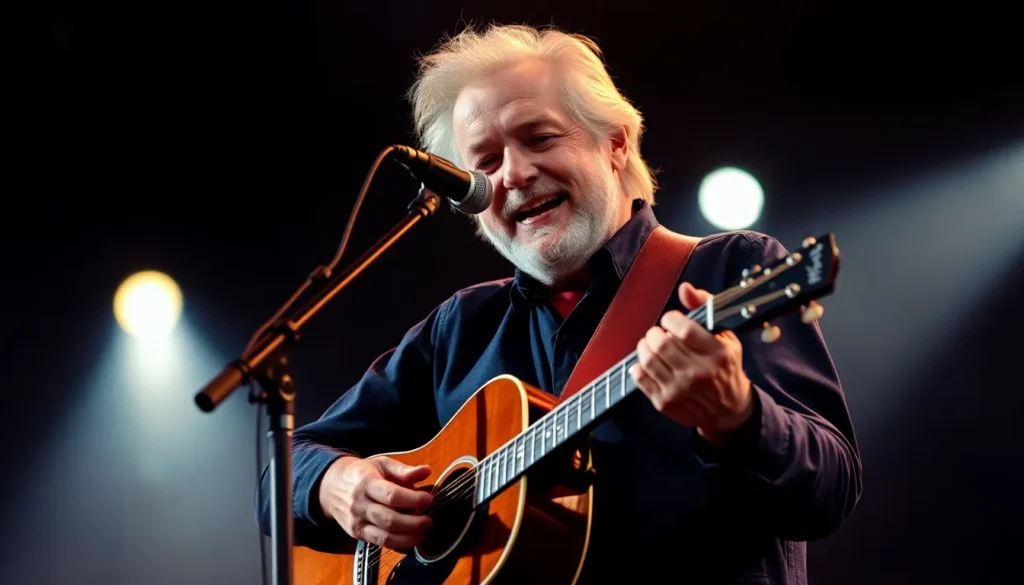
Gordon Lightfoot’s journey through music is both remarkable and inspiring. Born on November 17, 1938, in Orillia, Ontario, he developed an early passion for music that shaped his future.
Early Life
Lightfoot’s musical beginnings came during childhood, when he joined various choirs and learned to play the guitar. His family fostered his talents, encouraging his love for folk music. At age 13, he began performing locally, showcasing his ability beyond mere hobbies. High school brought further opportunities, as he immersed himself in music and literature. He moved to Los Angeles at 17 to study at the Hollywood School of Music, widening his influences. These formative experiences laid the groundwork for his vibrant career.
Musical Achievements
Lightfoot’s career launched in the late 1950s, leading to widespread recognition. Iconic albums like “Lightfoot!” defined his unique sound and creative storytelling. He effortlessly blended elements from folk, rock, and country, creating songs like “If You Could Read My Mind” and “Sundown.” His captivating storytelling resonated with audiences, earning him numerous accolades. Multiple Juno Awards and an induction into the Canadian Music Hall of Fame highlight his contributions. Enduring popularity stems from his ability to evoke strong emotions, making his music timeless and beloved across generations. His influence on contemporary artists continues to inspire new talents today.
Circumstances Surrounding His Death
The passing of Gordon Lightfoot raised questions about his health and final days. Understanding these elements provides a clearer perspective on this significant loss.
Health Issues
Throughout his later years, Lightfoot faced various health challenges. He struggled with serious conditions, including a heart condition that required surgery in 2002. In 2020, he experienced a mini-stroke that significantly impacted his well-being. These health concerns affected his touring schedule and led to fewer performances, yet he continued to share his music with fans. Lightfoot’s resilience shone through as he navigated these difficulties, with his love for music serving as a motivating force.
Final Days
In the months leading to his death, Lightfoot remained active in his creative pursuits. His friends noted his continued passion for songwriting and recording new material. Family members surrounded him during his final days, offering their support and companionship. Despite health complications, he often expressed gratitude for his life and career. Lightfoot’s commitment to his art remained unwavering. His legacy and impact on music remained central to conversations, even in his last moments.
Official Statement on Cause of Death
Gordon Lightfoot’s passing was officially confirmed on May 1, 2023. His family announced that he succumbed to the complications associated with his long-standing health issues.
Family and Public Reactions
Family members expressed profound sadness over their loss while celebrating Lightfoot’s incredible life. They highlighted his enduring legacy through his music and the joy he brought to countless fans. Public reactions showed a wave of mourning across social media platforms. Many fans shared their favorite songs and memories, illustrating the impact he had on their lives. Tributes from fellow artists and musicians poured in, acknowledging Lightfoot’s remarkable contributions to the music industry. Fans rallied to honor his memory through candlelight vigils and online forums, reflecting the deep connection many felt with his art. The collective grief underscored how deeply he resonated across generations, uniting a community in remembrance of his musical genius.
Legacy and Impact
Gordon Lightfoot’s legacy resonates profoundly in the music world. Known for his evocative storytelling and rich melodies, he shaped folk, rock, and country music. His songs, including “If You Could Read My Mind” and “The Wreck of the Edmund Fitzgerald,” capture timeless themes that resonate across generations.
Influence marks Lightfoot’s career. Many contemporary artists cite him as a key inspiration in their works. His ability to weave narratives into music sparked a renewed interest in storytelling through song. Listeners connect emotionally to his lyrics, which often reflect shared human experiences.
Recognition followed Lightfoot throughout his life. Winning multiple Juno Awards underscored his contributions to the Canadian music scene. Induction into the Canadian Music Hall of Fame highlighted his enduring impact. His albums consistently achieved critical acclaim, and songs remain staples on playlists globally.
Fans remember him fondly, reflecting on live performances that captivated audiences for decades. Community gatherings, such as candlelight vigils, showcased the profound impact of his music on listeners. Social media erupted with tributes, further illustrating the strong bonds formed through his art.
Health struggles did not diminish his spirit. Lightfoot displayed resilience, continuing to create music until his last days. Family and friends remained a constant support, honoring his artistic journey throughout challenges. This commitment to his craft leaves a lasting imprint on fans and fellow musicians alike.
Despite his passing, Lightfoot’s contributions endure. Songs continue playing in homes and on radio stations, reminding listeners of his genius. His music creates an emotional connection, ensuring that his legacy lives on for generations to come.
Gordon Lightfoot’s passing marks a significant loss in the music world. His profound influence on folk, rock, and country genres will be felt for years to come. The emotional depth of his lyrics and the timeless quality of his melodies have left an indelible mark on the hearts of fans and fellow artists alike.
As tributes continue to pour in, it’s clear that Lightfoot’s legacy is far from over. His songs will continue to resonate, bringing people together and inspiring future generations of musicians. Celebrating his life and artistry ensures that his spirit lives on, reminding everyone of the power of music to connect and heal.