
Imagine a world where flying cars are as common as coffee shops and robots do your laundry while you binge-watch your favorite series. Sounds familiar, right? Throughout history, people have made some wildly optimistic predictions about the future, often with hilarious results. From 19th-century visions of moon colonies to the promise of personal jetpacks by the year 2000, these forecasts reflect not just technological aspirations but also our collective imagination.
As we delve into the past predictions of the future, it’s impossible not to chuckle at some of the more outlandish claims. Yet, these whimsical forecasts reveal a deeper truth about human creativity and our relentless pursuit of progress. Join the journey through time as we explore how our ancestors envisioned tomorrow and how those visions shape our reality today.
Overview of Past Predictions
Predictions about the future often reveal a blend of innovation and imagination. Remarkable forecasts existed as early as the 19th century, where thinkers envisioned moon colonies as destinations for humanity. These early predictions laid the groundwork for today’s space exploration efforts, sometimes more far-fetched than feasible.
In the mid-20th century, visions of flying cars captured public fascination. Futurists promised that by the year 2000, personal jetpacks would be commonplace. While most individuals still rely on traditional automobiles, the dream of aerial travel continues to inspire research in vertical takeoff vehicles.
Technological advancements sparked optimism about household robots. Authors and filmmakers depicted robots performing chores, anticipating a future where machines handle daily tasks. Although domestic robots are available today, their capabilities remain limited compared to earlier forecasts.
Societal changes also shaped predictions. The rise of the internet in the 1990s led to predictions of a connected world with instantaneous communication. Today, instant messaging and video calls enable global interactions, validating some aspects of those earlier expectations.
Consideration of these past visions showcases human creativity and the desire to push boundaries. Each prediction reflects hopes for convenience and progress, shaping the landscape of modern technology. Exploring these forecasts illustrates how earlier dreams influenced contemporary innovations, revealing a fascinating journey that continues to evolve.
Notable Predictions from the 20th Century
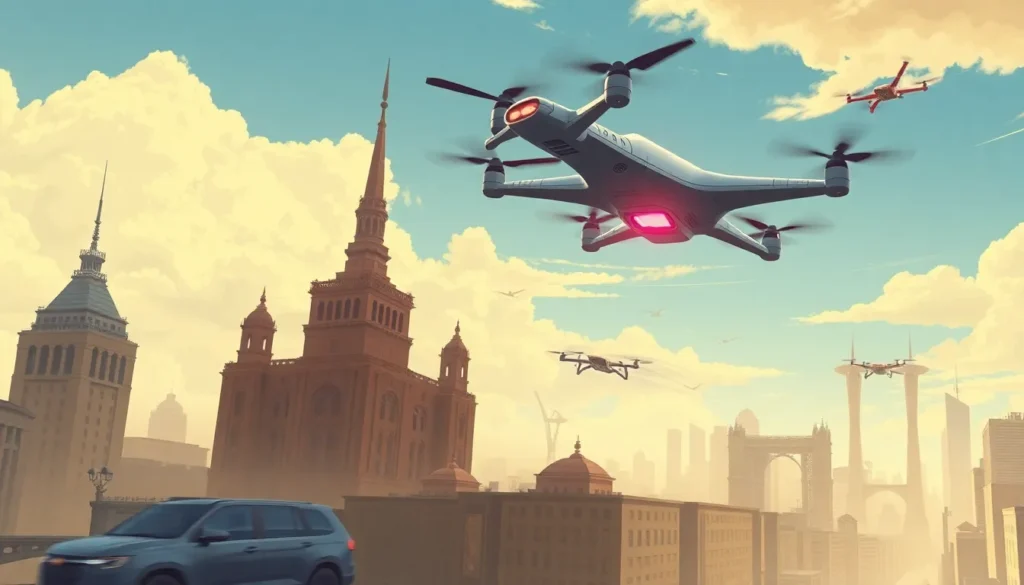
The 20th century marked an era of bold predictions that both inspired and amused. Many forecasts projected dramatic technological advancements alongside significant societal shifts.
Technological Innovations
Predictions about technologies shaped expectations throughout the century. Futurists often envisioned flying cars populating cityscapes, although they remain elusive. Personal robots completing household tasks featured prominently in stories, capturing the imagination across media. In the 1960s, experts predicted widespread home computer use by the year 2000. As of 2023, personal computers exceed those predictions, transforming work and communication. Despite not achieving the predicted flying cars, drone technology reflects a step toward realizing those dreams.
Social Changes
Social predictions also captured significant changes. Many envisioned the rise of a paperless society, anticipating that digital communication would replace traditional forms. By the end of the century, the internet emerged, creating a connected global community. Forecasts about increased leisure time due to automation stirred interest, even as many continued working traditional hours. Experts projected a shift in gender roles, foreseeing more women in the workforce. This prediction materialized, contributing to evolving family dynamics and societal structures. Such insights underscore how 20th-century predictions shaped ongoing conversations about the future.
Predictions from the 21st Century
The 21st century has brought a wave of predictions, varying from environmental expectations to shifts in the global political landscape.
Environmental Expectations
Experts forecasted significant advancements in sustainable energy and environmental preservation. Innovations like solar and wind power were anticipated to dominate global energy markets by 2020. While renewable energy sources have indeed grown, reliance on fossil fuels remains prominent. Climate change concerns prompted predictions of larger legislative actions, with countries expected to come together to combat global warming. Although international agreements exist, meaningful progress varies significantly. The rise of electric vehicles was touted as a solution to reduce carbon emissions, and their sales reflect growing consumer interest. Still, emissions continue to be a major world issue.
Global Political Climate
Predictions indicated a more interconnected world governed by cooperation and diplomacy. Many analysts expected multilateral organizations to play a critical role in resolving international conflicts and fostering collaboration on global challenges. Rising nationalism and protectionism observed in various countries contradict these optimistic forecasts. Analysts suggested that technology would enable more democratic participation in governance, yet political polarization increased instead. In addition, the potential influence of social media on political movements marked a notable shift. Geopolitical dynamics have proven complex, challenging many predictions made at the dawn of the century.
Analysis of Accuracy
Evaluating past predictions provides insights into their accuracy. Many forecasts show a mix of triumph and misjudgment.
Successful Predictions
Significant technological advancements emerged, particularly in computing. The prediction of widespread home computers by 2000 became a reality, with millions of households adopting them ahead of schedule. Mobile phones transformed communication, evolving into multifunctional devices that surpassed early expectations. Another successful prediction included the internet revolution, which connected people globally and reshaped how information is shared. Social media platforms emerged, enabling instant communication and interaction, reinforcing that early anticipations of an interconnected world largely materialized.
Failed Predictions
Numerous predictions failed to materialize despite their initial excitement. The vision of flying cars, so popular in mid-20th century media, remains unfulfilled as traditional transportation persists. Predictions of a paperless society presented a future dominated by digital communication, yet paper usage continues in various sectors. Another missed projection involved household robots, initially expected to manage chores efficiently; current robotic capabilities remain limited compared to optimistic forecasts. Environmental predictions urging significant shifts toward renewable energy by 2020 encountered challenges, as fossil fuel reliance remains prevalent despite some gains in sustainability.
Impact of Predictions on Society
Past predictions shaped societal norms and expectations significantly. Humans often react to bold forecasts by inspiring innovation, sparking creativity, and driving technological advancements. Moon colonies, once a whimsical idea, propelled contemporary interest in space exploration, leading to milestones in space travel.
Enthusiasm for flying cars captured imaginations in the mid-20th century. Despite the absence of these vehicles, advancements in drone technology represent incremental progression toward that vision. The idea of household robots handling daily chores motivated engineers and developers to create machines with increasing capabilities.
Predictions also influenced cultural shifts. The expectation of a paperless society led to the widespread use of digital technology in various aspects of life. Discussions regarding gender roles evolved as forecasts suggested more equitable family dynamics and work structures.
Societal resilience emerged in response to unmet expectations. While the failure of some predictions, such as flying cars and efficient robots, was apparent, successes like the integration of home computers and mobile technology reshaped communication and connectivity.
Environmental forecasts prompted awareness about sustainability. Increasing reliance on renewable energy sources in the 21st century aligned with predictions, although significant challenges remain due to continued fossil fuel dependency.
Political predictions also shaped expectations around global governance. Anticipated cooperation contrasted with the realities of rising nationalism and political polarization. This ongoing evolution reflects changing geopolitical landscapes, illustrating how predictions mold societal views and responses.
Predictions serve as a mirror to societal aspirations, showcasing hopes while exposing gaps between expectation and reality.
Past predictions of the future reveal a fascinating tapestry of human imagination and ambition. They highlight the interplay between creativity and technological advancement while showcasing how society’s expectations can shape innovation. While many forecasts fell short of reality, they inspired generations to dream big and strive for progress.
The journey through these predictions underscores the importance of resilience and adaptability in the face of evolving challenges. As the world continues to change at a rapid pace, the lessons learned from these whimsical visions remind us that the future remains unwritten, encouraging ongoing exploration and discovery.